User Research — ESD Toulouse
Too Good To Go — UX Research
Qualifying the meal basket experience for users with dietary restrictions
- Role
- Group project — UX researcher, semi-structured interviews, qualitative analysis, recommendations
- Timeline
- 2024
- Format
- 3 weeks
- Tools
- Google Meet, Google Docs, Figma, Google Sheets
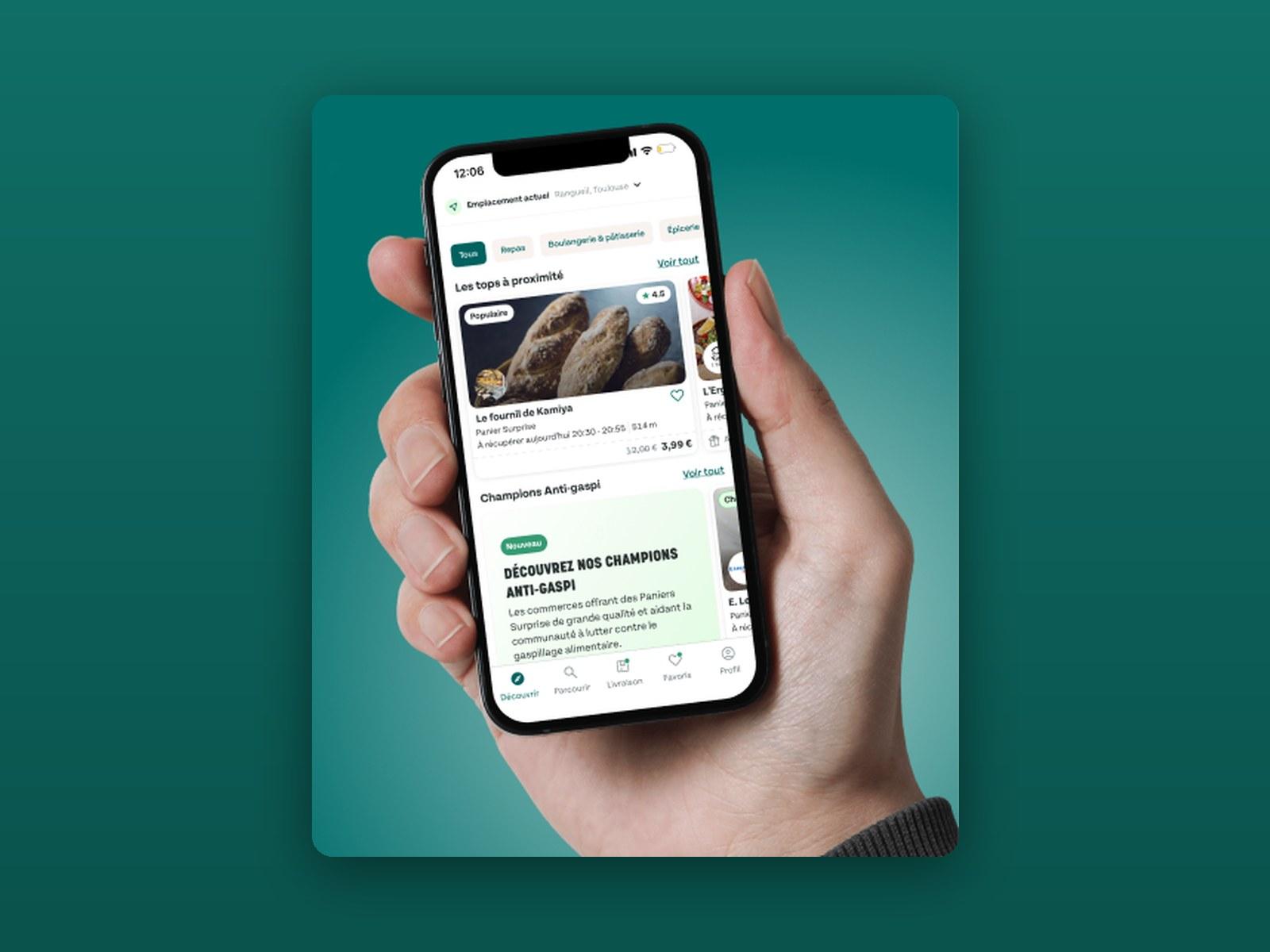
At a glance
- The problem
- People with a dietary restriction don't dare order a "surprise basket": 83% don't even know filters exist.
- The outcome
- With an enhanced filtering prototype, confidence rises from 5.4 to 8.5/10 and purchase intent from 37.5% to 100%.
- +57%confidence gain (5.4 → 8.5/10)
- 100%purchase intent after prototype (vs 37.5% before)
- 8semi-structured interviews
Context and problem
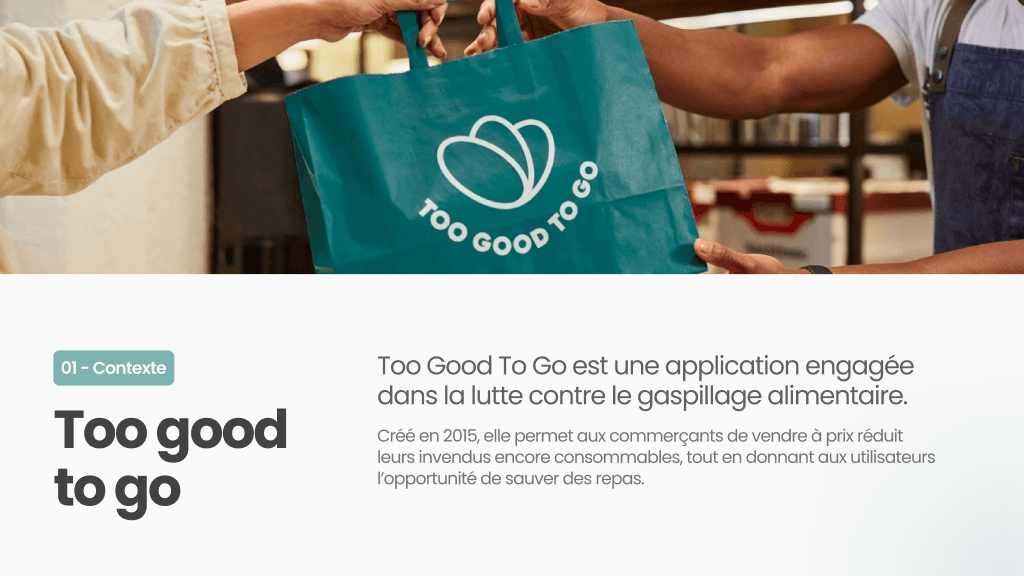
Too Good To Go is an app fighting food waste. Founded in 2015, it lets merchants sell their unsold food at reduced prices while giving users the chance to save meals. But for people with dietary restrictions, the "surprise basket" concept creates significant uncertainty.
Users with dietary restrictions (halal, allergies, vegetarian diets) navigate the app with less confidence. 75% don't use existing filters, 83% are unaware filters even exist, and 62.5% have abandoned a basket fearing incompatibility with their diet.
Research methodology
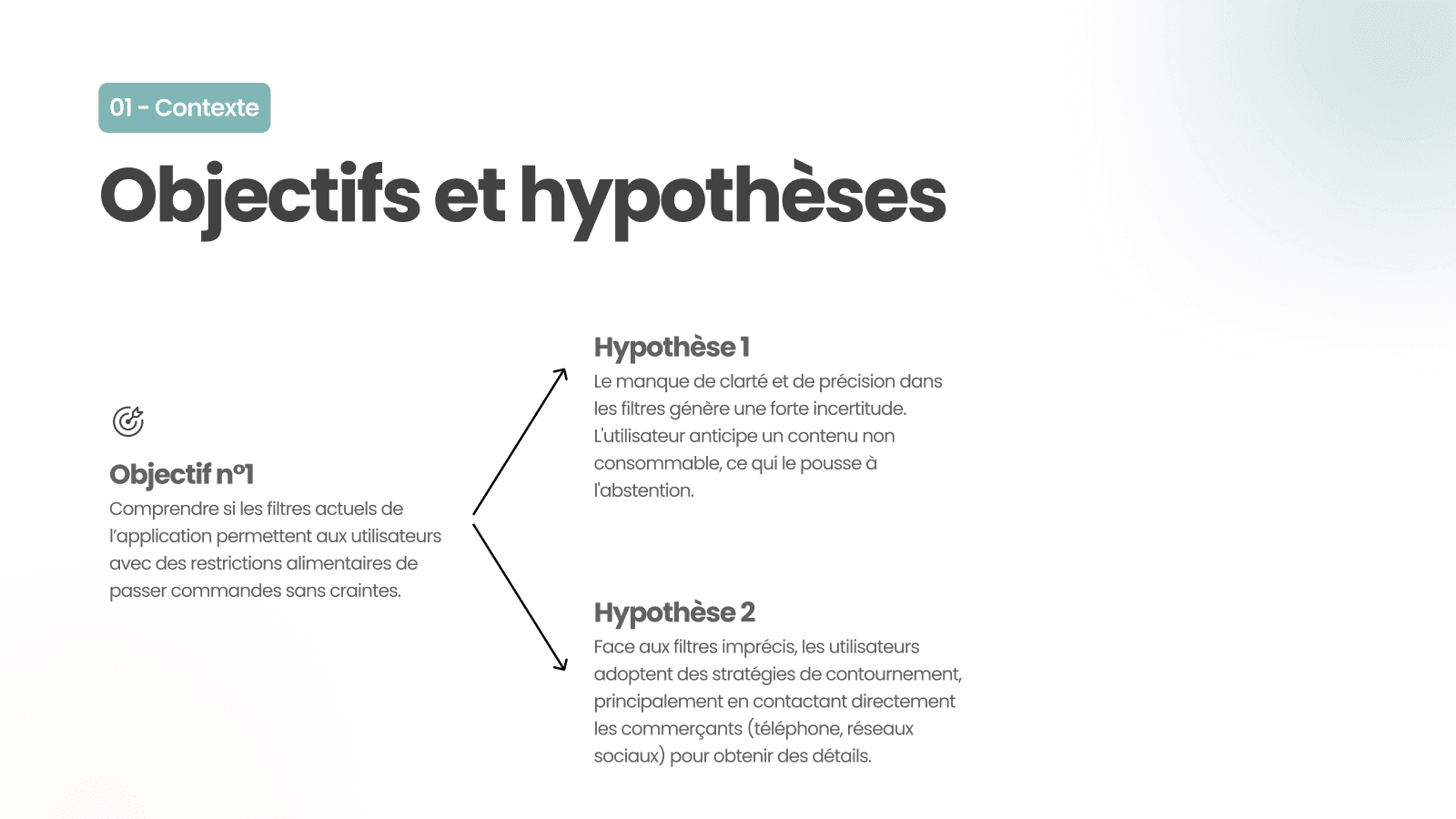
Hypothesis-led framing
With whom
The research team, before recruitment
What it revealed
Two objectives and four hypotheses to test: does uncertainty drive abstention? Do users work around the system? Would more precise filtering lift ambiguity? Would strict restrictions resist filtering alone?
Semi-structured interviews, in 3 scenarios
With whom
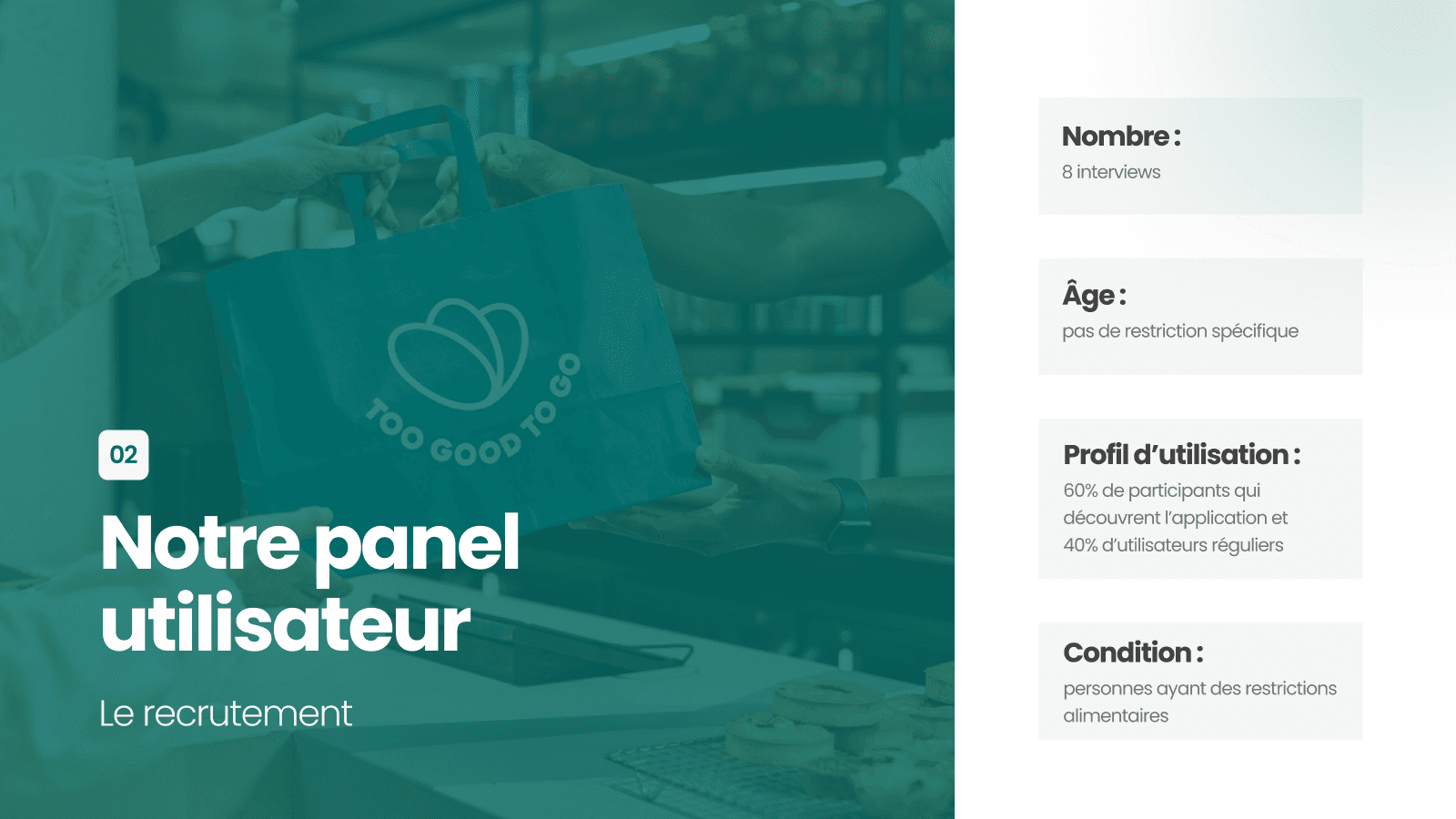
8 French-speaking participants with a dietary restriction (halal, allergies, vegetarian): 60% new users, 40% regulars
What it revealed
75% don't use the filters and 83% don't know they exist. 62.5% have already abandoned a basket fearing it wasn't compatible. To check contents, some call the merchant or go through social media.
Testing an enhanced filtering prototype
With whom
The same 8 participants, at the end of the interview
What it revealed
Confidence rises from 5.4 to 8.5/10 and purchase intent from 37.5% to 100%, including among the strictest profiles.
Verbatim analysis and cross-tabulation
With whom
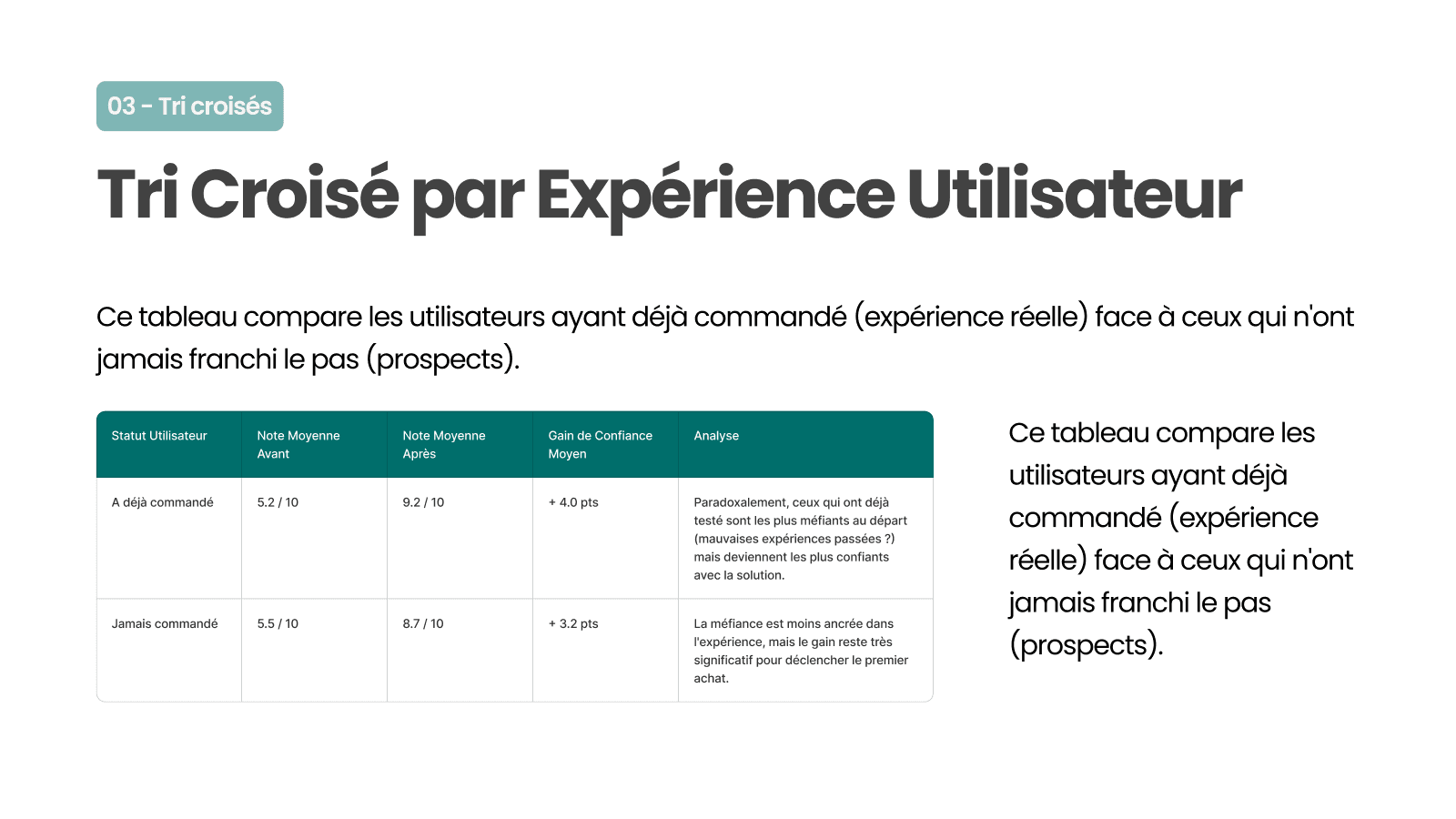
The 8 interviews, crossed along two axes: has ordered or never, religious or health restriction
What it revealed
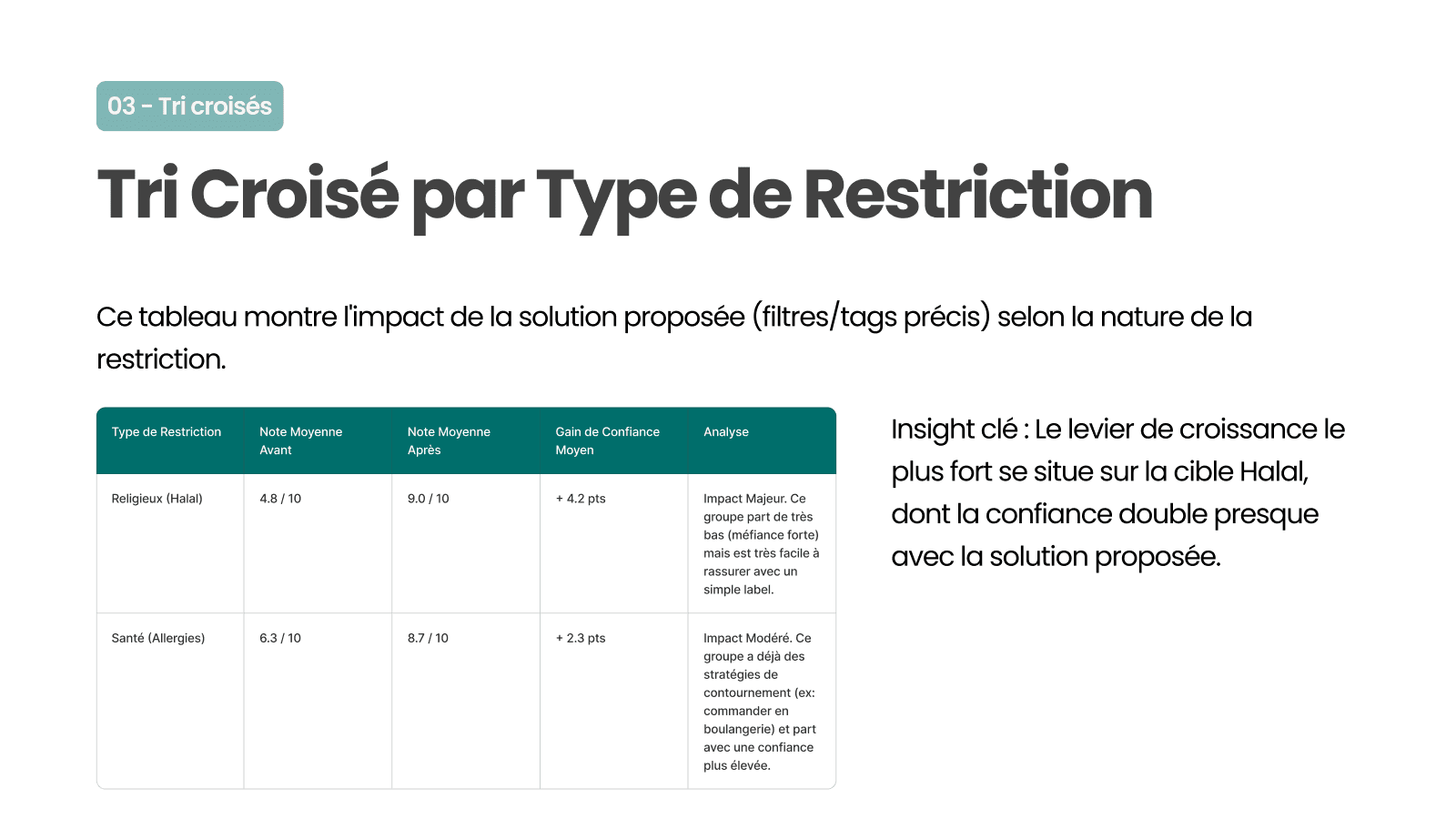
The halal audience starts lowest (4.8/10) but gains the most (+4.2 pts). Existing customers are the most distrustful at first (5.2/10) and become the most confident afterwards (9.2/10).
Confidence after enhanced filtering by restriction type
Halal — before
/ 10
Halal — after
/ 10
Allergies — before
/ 10
Allergies — after
/ 10
User needs
As a user with halal restriction, I want be sure the basket doesn't contain pork or alcohol before ordering, without having to call the merchant.
As a user with allergies, I want exclude specific allergens and receive a guarantee on the basket's contents.
As a new vegetarian user, I want quickly understand which baskets are compatible with my diet without navigating hidden filters.
Trade-offs
I chose
Prioritising the halal audience
over
Treating every restriction at the same level
because
It is the highest-return lever: the lowest starting confidence, the strongest gain, for the lowest product effort, a simple label.
I chose
Improving the existing filtering
over
Looking beyond filtering for strict restrictions
because
The hypothesis "filtering alone won't be enough" is disproven: purchase intent reaches 100% after the prototype, strict profiles included. That avoids false work.
I chose
Also targeting the reactivation of existing customers
over
Betting on new-user acquisition alone
because
Customers let down in the past are the most distrustful at first, but they gain the most confidence with the solution (+4.0 pts).
Final solution
A set of quick-win recommendations to make TooGoodToGo baskets accessible to people with dietary restrictions: more visible and explicit filtering, confidence labels on baskets ("100% Vegetarian"), an exclusion guarantee system, and a persistent dietary profile that personalizes the display from the home screen.
Filters surfaced and made visible
83% of participants didn't know filters existed. UI reorganized to expose them right on the search page instead of burying them in a settings submenu.
Explicit basket naming
Replace "Surprise Basket" with unambiguous labels: "100% Vegetarian Basket", "Bakery Basket". The highest-return lever identified — a simple label gains +4.2 pts of confidence on the halal audience.
Allergen exclusion guarantee
A displayed merchant commitment on the absence of specific allergens, turning an assumption into a verifiable promise — the top need for allergy profiles.
Persistent dietary profile
Users declare restrictions once; the app filters automatically from the home screen. Removes the burden of re-configuring each session, a major cause of abandonment.
Deliverables
- 8semi-structured interviews
- 4hypotheses tested
- 4quick-win recommendations
Measured outcomes
- +57%
- confidence gain (5.4 → 8.5/10)
- Measured by · confidence score out of 10, given by the 8 participants before and after the prototype
- 100%
- purchase intent after prototype (vs 37.5% before)
- Measured by · purchase intent stated in interview, before and after the prototype
What I learned
- Cross-tabulation by restriction type reveals the halal audience is the strongest growth lever: lowest initial confidence (4.8/10) but highest gain (+4.2 pts) with a simple label.
- Users who have already ordered are paradoxically the most distrustful at first (bad past experiences), but become the most confident with the proposed solution.
- Qualitative research on a small panel (8 interviews) can identify strong behavioral patterns and high-impact quick-wins before any design phase.